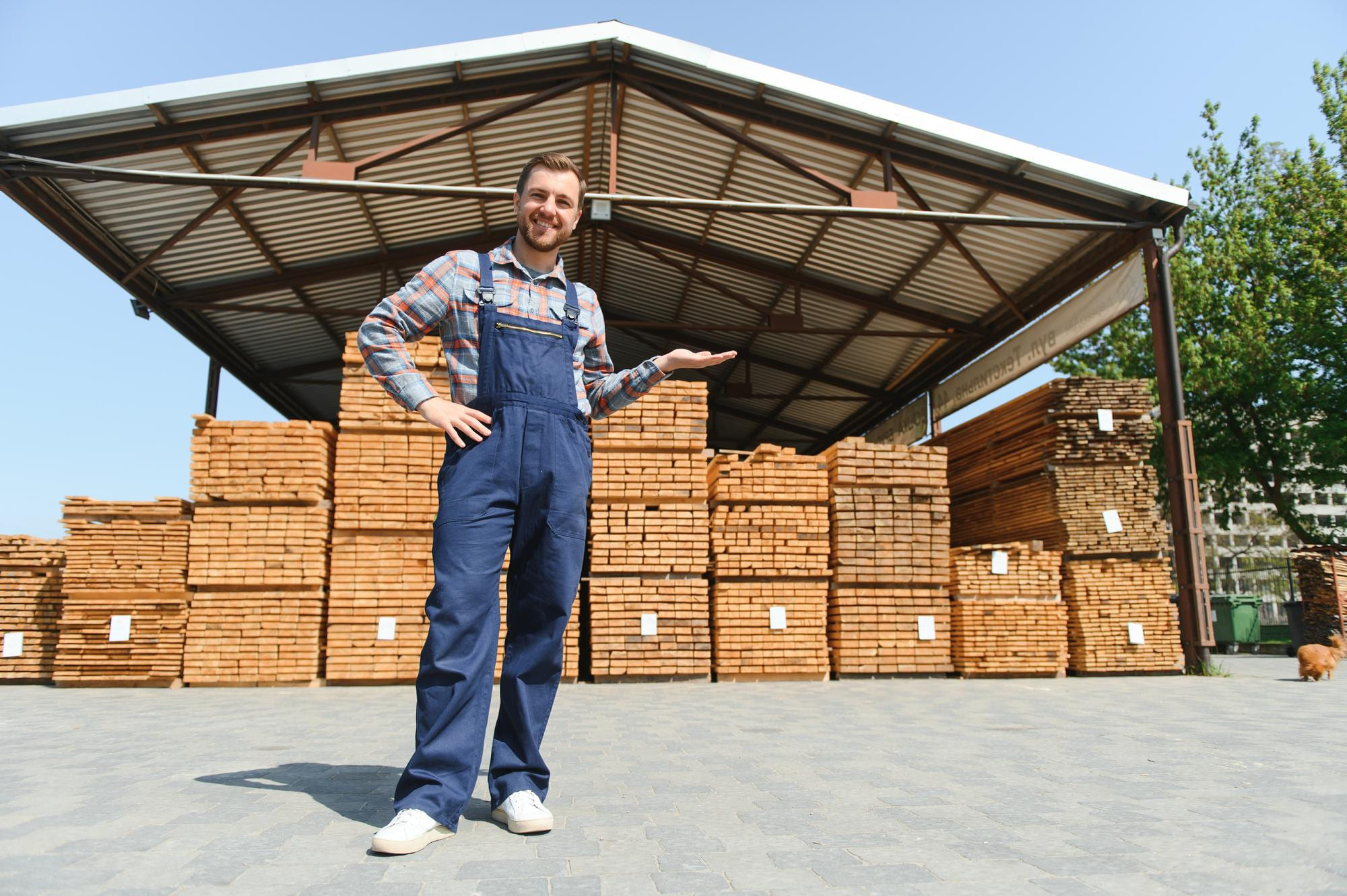
Purchasing sawn timber in Russia — at first glance, this seems like a simple task. The country has the world’s largest forest reserves, tens of thousands of producers, and competitive prices. However, between «finding a supplier» and «receiving quality goods on time» — there is an enormous distance.
This article will help you understand what types of sawn timber suppliers exist in the Russian market, what to pay attention to when choosing a partner, and how to avoid common mistakes. The information will be useful for importers from China, CIS countries, and other regions who are considering Russia as a source of timber for construction, production, or resale.
The Russian Timber Market: A Brief Overview for Buyers
Russia ranks first in the world in terms of forest area — more than 800 million hectares. This is approximately one fifth of all forest land on the planet. The forestry industry is one of the oldest sectors of the Russian economy, and it remains significant for many regions.
According to 2025 results, the volume of sawn timber export shipments from Russia amounted to approximately 24 million cubic metres — 5% more than the previous year. Forest products were delivered to 40 countries. At the same time, domestic production declined slightly: in January–November 2025, output was 26.3 million cubic metres, which is 2% less than the previous year’s figure.
Which Countries Buy Russian Sawn Timber
The largest buyer remains China — it accounts for more than half of exports, approximately 13.4 million cubic metres. However, the geography of deliveries is expanding: Central Asian countries — Uzbekistan, Kazakhstan, and Kyrgyzstan — have entered the ranks of major importers. Interest from India is growing noticeably: exports of sawn timber to that country in 2025 increased by 2.6 times. Products are also supplied to Turkey, Egypt, Iran, Saudi Arabia, and the UAE.
Advantages of Russian Sawn Timber Suppliers
- Competitive product pricing due to the availability of raw materials
- A wide range of wood species: pine, spruce, larch, birch, cedar
- Availability of producers with experience working for export
- Well-developed logistics in the direction of China and Central Asia
However, the market is not homogeneous. A supplier must be chosen carefully, taking into account the specifics of the product, the region, and the producer itself. The G2R platform helps foreign importers find verified suppliers in Russia and other countries.
Types of Timber Suppliers: From Logger to Trader
Before ordering sawn timber, it is important to understand exactly who you will be working with. Companies in the Russian market differ in scale, role in the production chain, and approach to clients.
Logging companies are enterprises that are directly engaged in felling and primary processing of timber. They own or lease forest plots and supply raw materials: round timber, logs. For an importer who needs finished beams or boards, working directly with a logging company is usually inconvenient — it will be necessary to find a processor.
Wood processing enterprises are the next link. They purchase raw materials and produce finished goods: edged boards, beams, small beams, moulding products. Many of them are also engaged in drying and antiseptic treatment of materials. This is the primary type of supplier for most importers.
Vertically integrated holdings combine all stages — from harvesting to deep processing. The leaders in the ranking of Russia’s largest timber producers harvest approximately 12 million cubic metres of timber. Such companies offer stable quality and large volumes, but the minimum order quantity (MOQ) is generally significantly higher.
Traders and intermediaries are companies that do not have their own production, but aggregate goods from various producers. On the one hand, they are convenient: you can order different types of sawn timber in one place. On the other hand — an additional link is added to the chain, which means risk and cost increase.
| Type of Supplier | Advantages | Disadvantages |
| Small business (small sawmills) | Flexibility, possibility of small lots | Quality check upon goods acceptance |
| Medium business | Balance of price and quality, export experience | Documentation verification required |
| Large business (holdings) | Stability, full production cycle | High MOQ, less flexible terms |
For an importer who is just entering the market, the optimal solution is often a medium-sized producer with a confirmed track record of export deliveries. On the G2R platform, a personal manager will help you select the most suitable supplier option.
Types of Products of the Russian Forestry Industry
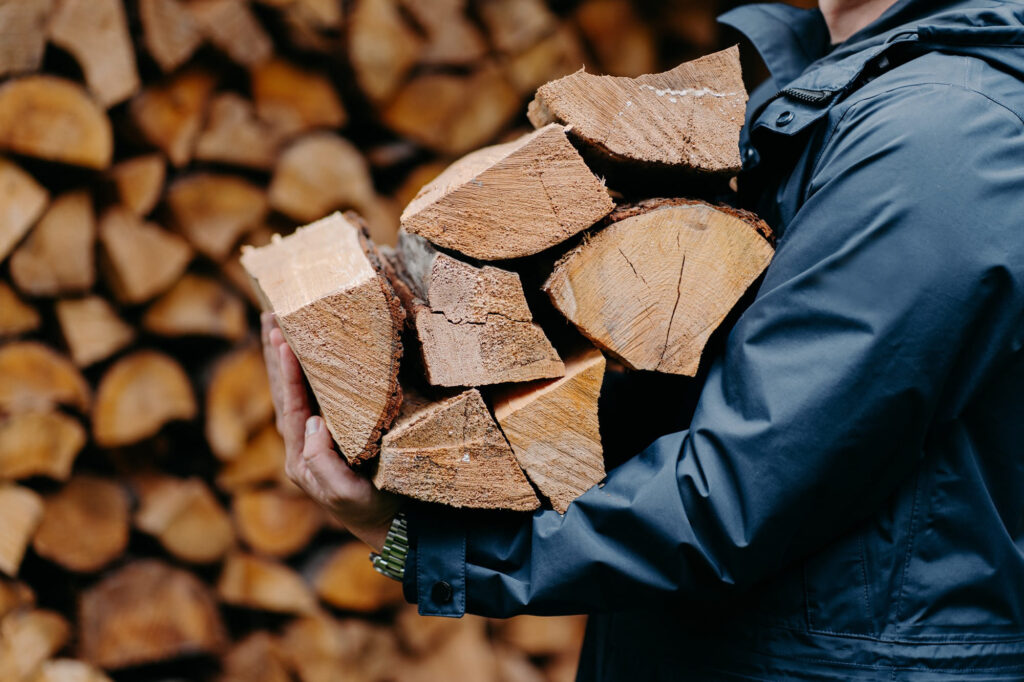
The range of products of Russia’s forestry-and-timber complex (LPK) is wide — from unprocessed round timber to high-tech glued structures. Let us examine the main product categories that are in demand for export.
Round timber (logs) — raw material for further processing. The export of unprocessed timber from Russia is restricted: since 2022, quotas and increased duties have been in effect. For example, the duty on beams from softwood is 200 euros per cubic metre, and for sawn timber — 10%, but not less than 13 euros per cubic metre. Therefore, most exporters work with more deeply processed products.
Softwood sawn timber — the basis of Russian exports. This includes edged and unedged boards, beams, and small beams. The overwhelming majority of exports — 93.6% — consists of sawn timber from softwood species: pine, spruce, and larch. This product is used in the construction of residential and commercial buildings, as well as in furniture and packaging production.
Plywood — another significant export product. Russia is among the world’s largest producers of birch plywood. More than 71% of the plywood produced in the country is exported.
Wood pellets (biofuel) — an environmentally friendly fuel made from wood processing waste. Sales of wood fuel in Russia are growing steadily and exceed 7.7 million tonnes per year.
Glued timber (LVL, CLT) — materials for modern timber-frame construction. They are more expensive than regular beams, but have improved strength and stability characteristics.
For customs clearance, it is necessary to know HS codes (TN VED). Key positions: 4407 (sawn timber), 4412 (plywood), 4401 (fuel wood, pellets), 4418 (wood products, including CLT and LVL).
Production Geography: Where the Main Capacities Are Concentrated
Choosing a supplier’s region is not only a question of timber quality, but also of logistics. Distances in Russia are enormous, and transport costs can significantly affect the final price.
The key districts for Russia’s forestry industry are the North-West (Vologda, Arkhangelsk, and Leningrad Oblasts, Karelia, Komi) and Siberia (Irkutsk Oblast, Krasnoyarsk Krai).
North-West Russia — the historical centre of timber processing. The North-West regions are interesting not only for their natural wealth, but also for their developed transport infrastructure: the seaports of Murmansk and Arkhangelsk, timber-floating rivers, logging roads. High-quality pine and spruce sawn timber is produced here, which traditionally went to European markets. These flows are now being redirected eastward.
Siberia (Irkutsk Oblast, Krasnoyarsk Krai) — the largest region by harvesting volumes. According to data from Roslesinforg, the leaders in sawn timber production are Arkhangelsk Oblast, Irkutsk Oblast, Krasnoyarsk Krai, and the Komi Republic. Siberian larch is valued for its strength and moisture resistance. The logistical advantage — proximity to China: rail routes via Zabaykalsk and Manchuria.
The Far East (Khabarovsk and Primorsky Krais) — the region closest to Asian markets. Deliveries to China from Siberia and Far Eastern regions constitute the main part of timber exports to China. However, production capacities here are smaller than in Siberia or the North-West.
The Urals (Sverdlovsk and Perm Oblasts) accounts for approximately 10% of the country’s LPK output. The region also has reserves of softwood species and convenient rail routes to Kazakhstan and Central Asia.
Which region should you choose? It depends on the delivery route:
- For China — Siberia and the Far East are optimal
- For CIS countries (Kazakhstan, Uzbekistan) — the Urals and Western Siberia
- For sea deliveries — the North-West with access to ports
GOST, TU, and International Standards: How to Verify Quality
When choosing a sawn timber supplier, the quality issue is one of the key ones. How can you be certain that a board or beam meets the stated characteristics? Russia has a standards system that every importer needs to understand.
GOST — a state standard establishing mandatory requirements for products. GOST 8486-86 applies to softwood sawn timber and establishes technical requirements for products intended for use in the national economy and for export. This standard is the baseline document for assessing the quality of boards, beams, and small beams made from pine, spruce, larch, cedar, and fir.
In terms of timber quality and processing, boards and small beams are divided into five grades (select, 1st, 2nd, 3rd, 4th), and beams — into four grades. The grade is determined by the number and type of timber defects: knots, cracks, blue stain, wane.
A separate standard applies to export deliveries. GOST 26002-83 applies to edged softwood sawn timber supplied for export through the White Sea, Far Eastern, Leningrad, and Igarka ports. Requirements for export products are stricter: both ends must be sawn perpendicular to the longitudinal axis, bark on the wane is not permitted.
TU (Technical Conditions) — a document developed by the producer itself. TU may supplement or clarify GOST requirements for a specific type of product. However, it is important to understand: TU is not a replacement for GOST, but a supplement. If a supplier offers goods «per TU» without reference to the underlying GOST, attention should be paid to the specific parameters and they should be compared with your requirements.
Moisture content — a critical parameter. Select, 1st, 2nd, and 3rd grade sawn timber is produced dry (with moisture content no more than 22%) or green. For construction and furniture production, dry kiln-dried material is usually required (8–12%). Green sawn timber is cheaper, but during transportation it may warp and become mouldy.
Which documents should be requested from a supplier?
Certificate of conformity with GOST
What to Pay Attention to When Choosing a Supplier
Choosing the right partner is half the success of a transaction. Below are criteria that will help assess a company’s reliability before signing a contract.
Counterparty verification. The G2R platform provides goods from verified and reliable suppliers. This makes it possible to minimise all risks.
Production capacities. Request information about actual production volumes, equipment, and number of employees. A serious sawn timber producer is usually ready to conduct a video tour of the facility or receive a client’s representative on-site. If a company evades such questions — this is a reason to think twice.
Export delivery experience. Working for export requires knowledge of customs procedures, document preparation, and an understanding of the importing country’s requirements. Ask about previous contracts: which countries they shipped to, what volumes, whether there were any complaints. Having experience of deliveries to China or CIS countries is a good sign.
Contract terms. Discuss the delivery basis under Incoterms (FOB, CIF, DAP, and others), shipment timelines, and payment procedure. The standard scheme is a 30% advance payment and the balance after shipment or against a copy of the bill of lading. Full prepayment without bank guarantees — a risky option, especially in the first transaction.
Reputation. Look for reviews about the company, ask for recommendations from industry colleagues. However, the absence of negative reviews on the internet does not guarantee reliability — many Russian sawn timber producers simply are not represented in the public space.
What else to pay attention to: the existence of a company’s own website with up-to-date information, willingness to provide product samples, speed of responses to enquiries. All of this indirectly indicates how a company organises its work with clients.
The G2R platform has verified suppliers of timber and wood processing products connected to it. Selecting a supplier with the help of the G2R team minimises risks.
Common Mistakes When Purchasing Timber
Even experienced importers sometimes make mistakes that turn out to be costly. Let us examine typical situations — and ways to avoid them.
Quality does not meet expectations. You ordered first-grade beams and received second- or third-grade ones. The reason — imprecise wording in the contract or the absence of an inspection before shipment. The solution: specify the exact GOST and grade in the contract, require a photo report of the batch, and for large orders — hire an independent inspector.
Moisture content problems. Sawn timber declared as «dry» arrives with moisture content of 30% or higher. In transit it warps and becomes mouldy. To prevent this, specify the maximum moisture content and the measurement method in the contract. Use a moisture meter upon acceptance.
Deadline violations. Shipment delays are a frequent problem, especially during peak demand season or during logistics disruptions. Build in a time buffer and fix penalty clauses for delays in the contract.
Incorrect marking and documents. Errors in shipping documents, discrepancies between markings and the cargo, absence of a phytosanitary certificate — all of this leads to customs delays. Check documents before shipment, not after.
Hidden costs. The cost of goods «at the factory gate» and the cost with delivery to the destination port are two different things. Clarify what is included in the price: loading, delivery to the railway station, document preparation. Otherwise, unpleasant surprises may arise in the future.
Language barrier. Not all Russian producers speak English or Chinese. Misunderstandings in correspondence can lead to errors in the specification. If there is no confidence in the quality of communication — engage a professional translator or work through a platform with translation support.
Most of these problems are solvable with proper preparation together with the G2R platform team.
How the Platform Helps Find a Verified Supplier
G2R — a B2B platform created for Russian producers to work with foreign buyers. The platform solves many of the tasks described above: from finding a supplier to transaction support.
The platform features product card listings across various categories, to which verified and reliable suppliers from Russia, CIS countries, and other foreign countries are connected. Product cards contain information about the product, prices, and delivery terms. Selection by category is possible: beams, boards, plywood, pellets, and other materials.
Localisation and translation. Product cards are adapted for foreign markets. A built-in chat with an AI translator allows you to communicate with a personal manager and supplier in your native language — the system automatically translates messages in both directions.
Transaction support. The platform offers assistance with export documentation preparation, logistics organisation, and foreign currency settlements. This significantly simplifies the process for importers who have no experience working with Russia.
Commission on results. Unlike traditional intermediaries, G2R charges a commission only on successfully concluded transactions. This reduces risks for the buyer at the outset.
If you are looking for a reliable sawn timber supplier from Russia and want to minimise the risks of your first transaction — explore the catalogue on the platform’s website or contact a manager for a consultation.
Conclusion
Choosing a timber supplier in Russia is a task that requires attention to detail. The market is large, there are many producers, but not all of them are ready to work for export. Take into account the type of supplier, the production region, and product compliance with GOST standards; verify documents and the company’s reputation. This will help avoid typical mistakes and build long-term cooperation with a reliable partner.