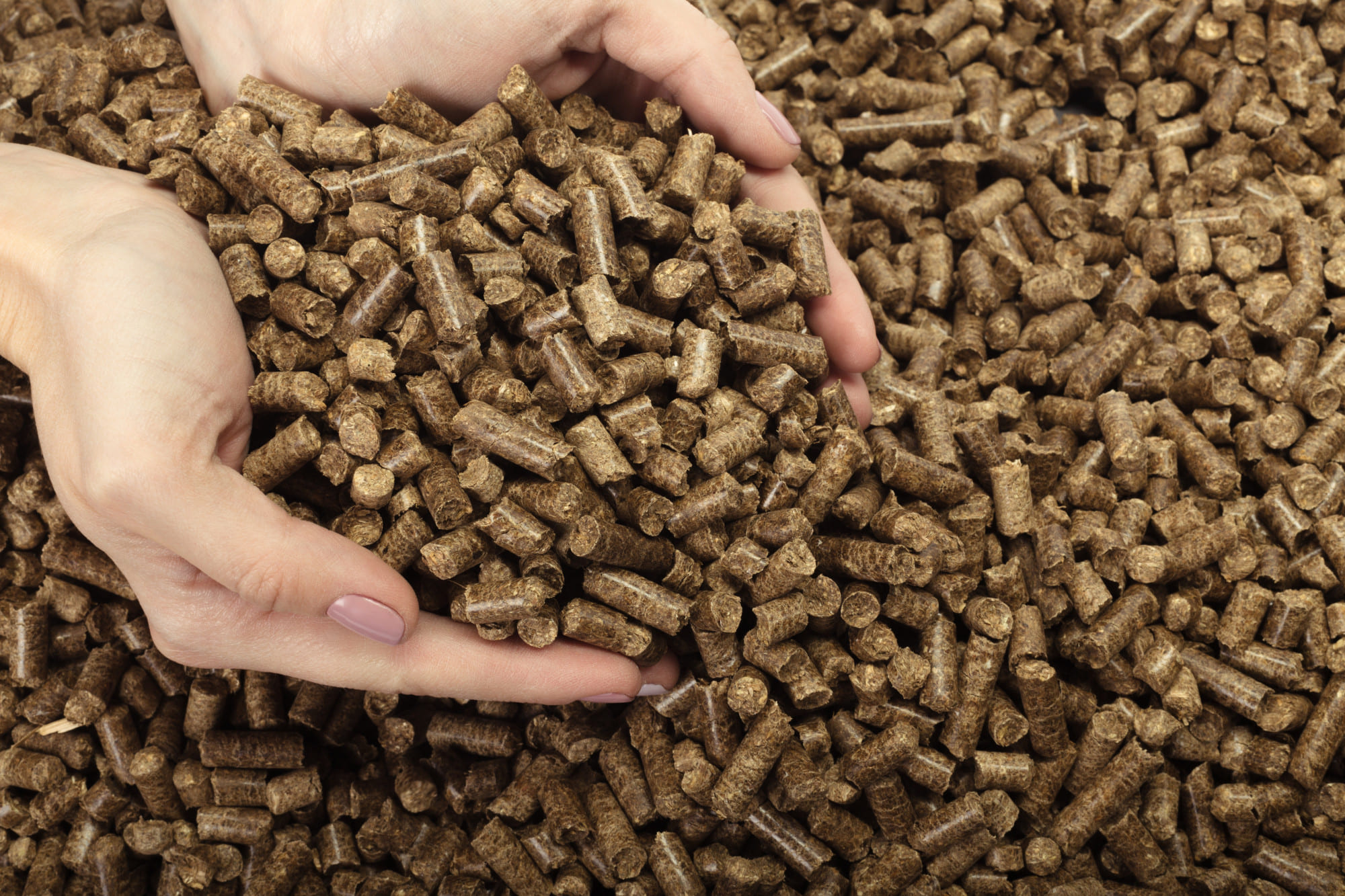
When the conversation turns to feed raw materials, most people think of soy first. Yet a quiet revolution has been unfolding on the global market for several years now — sunflower meal is steadily wresting market share from its soy competitor. And Russia plays a key role in this process.
Over the past decade, the country’s oil and fat industry has made an impressive leap forward. Meal production is showing growth that few could have predicted back in 2015. Today, Russian sunflower meal is purchased in dozens of countries — from Turkey to Bangladesh — and demand continues to rise.
Sunflower Meal: What It Is and Why It Is in Demand on the Global Market
Sunflower meal is a by-product of oil extraction production — in simple terms, what remains after oil has been extracted from sunflower seeds. That said, calling it «residue» would be unfair. The product contains between 30 and 50 percent of easily digestible protein, is rich in B- and E-group vitamins, and phosphorus. In terms of feed value it competes fully with soybean meal, and on certain indicators even surpasses it.
Global sunflower meal production in recent years has fluctuated within a range of 21–22 million tonnes per year. The main producers remain EU member states and Russia, together accounting for more than 70 percent of global output.
The processing of oilseeds in Russia has reached a fundamentally new level. At the end of 2024, the country’s sunflower meal output reached nearly 7.9 million tonnes — an absolute world record for a single country, representing a 19 percent increase in just one year.
Why buyers choose sunflower meal:
- Price. Cheaper than the soy equivalent at a comparable nutritional value.
- Non-GMO. A critically important indicator for a number of markets, including China.
- Versatility. Suitable for poultry, pigs, cattle, and fish.
- Consistent quality — provided one works with verified suppliers.
Interesting shifts are taking place on the sunflower meal market. China, traditionally oriented towards soybean meal, has since 2021 been systematically reducing its dependence on soy. Feed manufacturers in the country are actively seeking alternatives — and sunflower meal has emerged as the obvious solution.
Advantages of Russian Sunflower Meal for Foreign Buyers
Russia holds first place in the world in terms of sunflower-planted area. In 2025, plantings reached a record 11 million hectares — one million more than the previous maximum. Such a raw-material base ensures the supply stability that large importers prize so highly.
High protein content. Domestic oil-extraction plants produce meal with a protein content of 36 to 46 percent, depending on the degree of seed dehulling. The 46 percent figure is already comparable to soybean meal.
Non-GMO. In Russia, the cultivation and breeding of genetically modified plants and animals is prohibited by federal law (Federal Law No. 358-FZ of 3 July 2016). For buyers from China and a number of other regions, this is a matter of fundamental importance.
Variety of product forms. Manufacturers offer both pelleted and non-pelleted meal with different fibre contents, making it possible to select a product for specific needs — whether a compound-feed plant or a livestock farm with its own feed production.
Competitive price. The average export price of Russian sunflower meal has historically been lower than that of comparable products from Argentina or Europe, while quality meets international standards.
As a result of this dynamic, Russia has secured a strong position among the world’s leading exporters, holding a share of approximately 25–28 percent of global exports.
Geography of Production: Key Regions of Russia
Output is concentrated in several macro-regions.
The Volga region is the main sunflower-growing breadbasket. Saratov Oblast consistently holds the lead in gross harvest. Based on 2024 results, more than 2 million tonnes of seeds were collected here — 12 percent of the national figure. Orenburg Oblast posted a record growth of 29 percent and moved into second place with a volume of 1.86 million tonnes.
The Southern Federal District. Rostov Oblast harvested around 1.57 million tonnes, Volgograd Oblast around 1.4 million tonnes. Krasnodar Krai, despite its favourable climate, focuses on other crops.
The Central Black Earth region. Voronezh Oblast is the undisputed leader of the district, with output of around 1.19 million tonnes. Fertile black-earth soils ensure a yield of up to 26 centners per hectare.
Siberia — a region of growing potential. Altai Krai harvested more than 1.15 million tonnes of sunflower, placing it among the country’s top seven producers.
The largest oil-extraction enterprises are concentrated in Rostov, Voronezh, Saratov oblasts and Krasnodar Krai. According to the Oil and Fat Industry Union, more than 60 large sunflower-processing facilities are operating in Russia, with combined capacity exceeding 30 million tonnes of raw material per year.
Proximity to the ports of the Azov–Black Sea basin simplifies export logistics: products from the southern regions are shipped through the ports of Novorossiysk, Taman, and Rostov-on-Don. Volga-region plants can use both the Black Sea route and overland routes to CIS countries and China.
Applications: From Compound Feed to Aquaculture
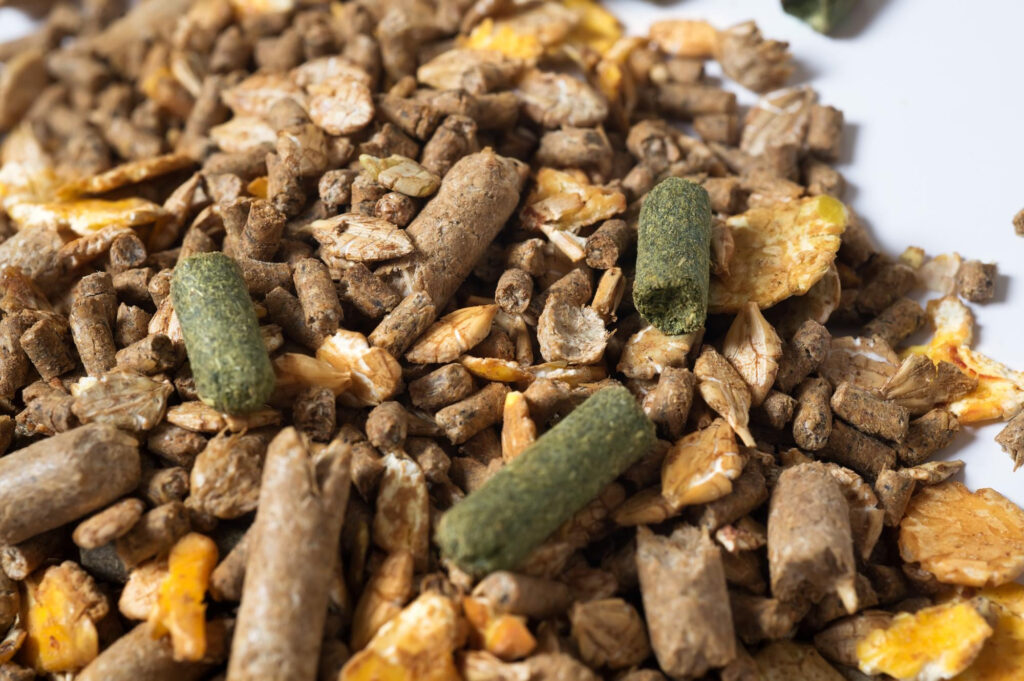
Sunflower meal is one of the most economically efficient sources of plant protein for livestock farming. In finished compound feed, its share can reach 15–25 percent depending on the formulation and intended use.
Poultry farming ranks first in consumption volume. Broilers and laying hens assimilate this feed well; the high methionine content is particularly valuable for feather formation and egg production.
Pig farming is the second largest consumer. Meal is included in rations at all stages of fattening, and works especially well in combination with grain components.
Cattle receive meal both as part of compound feed and directly as a supplement to the main ration. Dairy farming has noted significant increases in milk yields when sunflower meal is included in the feed base.
Aquaculture is a relatively new but rapidly growing direction. Feed manufacturers for fish were the first to begin actively purchasing sunflower meal in China. For raising carp, tilapia, and other species it is particularly well suited.
Sunflower Meal vs. Soybean Meal
The main difference lies in the amino acid profile: soybean meal is richer in lysine, sunflower meal in methionine. In practice, the best results come from combining both types. That said, with proper diet balancing, sunflower meal is fully capable of replacing soybean meal — especially when the price difference is taken into account.
Rapeseed meal is another competitor in the protein-feed market. Its production in Russia is also growing: according to Oil and Fat Industry Union forecasts, output will increase from 2.2 million tonnes in the current season to 2.9 million tonnes by the end of next year. Nevertheless, sunflower meal retains its leadership thanks to a broader raw-material base and well-established processing technologies.
Major Importers and the Role of China
The traditional main buyers are two countries — Turkey and Belarus. Turkey purchases more than 1 million tonnes per year, using the product for its developed poultry sector. Belarus imports around 790,000 tonnes — a significant portion goes to local compound-feed plants and is subsequently re-exported to EU countries.
The most interesting prospects, however, are linked to China. In 2021, the Chinese authorities made a strategic decision to reduce dependence on soy imports; compound-feed producers were tasked with cutting the share of soy in their formulations. Sunflower meal is cheaper, non-GMO, and available in large volumes. Chinese aquaculture feed producers were the first to try the new product; according to some data, the potential for sunflower meal imports into China could reach 1 million tonnes per year. While that figure has not yet been reached, the trend is clear, and China’s largest livestock holdings have already included it in their procurement programmes.
Beyond Turkey, Belarus, and China, Russian meal is also purchased by:
- CIS countries — Uzbekistan, Kazakhstan, Azerbaijan
- The Middle East — Iran, Lebanon
- South Asia — Bangladesh, Pakistan
- North Africa — Egypt, Morocco
Russian sunflower meal exports for the 2023/24 season totalled approximately 3 million tonnes. Together with soybean and rapeseed meal, total shipments exceeded 4 million tonnes in the previous season.
Opportunities for International Buyers and Investors

Direct Purchasing
The export duty on sunflower meal is calculated using a floating formula and depends on world prices. In March 2025, the rate stood at 1,742 roubles per tonne; in February it was 3,889 roubles. This is substantially lower than the duty on sunflower oil, making meal an attractive export product.
It is important to understand the current market environment. The 2025/26 season got off to a difficult start for sunflower meal exporters. Over the first four months (September–December 2025), shipments totalled 621,000 tonnes — 28 percent less than the same period of the previous season. The reasons are a strengthening rouble, high raw-material procurement prices, and competition from other oilseeds.
For buyers, however, such a situation may be advantageous. Producers are interested in stable sales and are prepared to discuss flexible contract terms.
Long-Term Contracts
Long-term contracts allow volumes and terms to be locked in for a season or longer. For large buyers this is a way to hedge against price volatility. Russian producers, in turn, are interested in stable sales.
An important point for international buyers: analysts do not expect any increase in domestic Russian demand for meal — internal consumption remains stable at around 2.5 million tonnes. This means that any increase in meal production is directed towards exports. Competition for the product from the domestic market is minimal.
Investment Opportunities
Oilseed processing in Russia is experiencing an investment boom. In recent years, new lines have been commissioned in Rostov, Orenburg, and Kursk oblasts, and plants are being built in Siberia and the Far East. For foreign investors, areas of potential interest include:
- Joint ventures for deep processing of meal
- Logistics projects — terminals, warehouses, transport hubs
- Participation in the modernisation of existing facilities
Rapeseed meal deserves separate attention: its exports have shown explosive growth of 62 percent in the first four months of the 2025/26 season. China is purchasing more than 85 percent of this volume, replacing Canadian supplies that have fallen under restrictions. Diversifying procurement between sunflower and rapeseed meal may be an interesting strategy for importers.
Market Development Prospects to 2030
The 2025 season proved difficult for Russia’s oil and fat industry. The Oil and Fat Industry Union estimates total oil-and-fat product exports for 2025 at 10.8 million tonnes — 12 percent less than the year before. High raw-material prices, a strong rouble, and intensifying competition on the global market all played a role.
Nevertheless, experts expect a recovery. According to forecasts, in 2026 total export volumes could grow by 11 percent relative to 2025 levels. The federal centre Agroexport offers an ambitious projection: exports of sunflower cake and meal could in time exceed 3–3.5 million tonnes per year.
Factors that will support growth:
- Expansion of the raw-material base. Russia set a record in sunflower planted area in 2025 — 11 million hectares. According to ICAR data, the total oilseed harvest approached 33 million tonnes, creating a solid foundation for meal production.
- Development of processing capacity. Investment in the industry continues unabated. Meal and cake production in 2025 is estimated at 14.2–14.3 million tonnes — growth of 7 percent. New plants are being built with a focus on exporting finished products rather than raw materials.
- Growth in global demand. World consumption of protein feeds continues to rise alongside the development of livestock farming in Asia, Africa, and Latin America. Sunflower meal is one of the beneficiaries of this trend.
Restraining factors, however, should not be overlooked. Climate risks have not disappeared — drought in southern Russia in 2025 led to reduced yields in certain regions. Exchange-rate volatility and export duties also introduce uncertainty.
Competition on the global market is intensifying. According to the USDA’s March report, Argentina will increase sunflower production to 7 million tonnes, with export forecasts revised upward. EU countries are expanding their own processing capacity.
Even so, the long-term prospects for Russian sunflower meal look stable. Russia holds first place in the world in sunflower oil exports, with a share of around 40 percent — and this infrastructure serves the entire oil-and-fat sector, including meal. For those considering entering the Russian market or expanding their procurement, the present moment has its own particular characteristics. Building partnerships now is better than waiting until the market re-enters a phase of vigorous expansion.