According to the lunar calendar, the date of Chinese New Year shifts every year. In 2027, Chunjie — the Spring Festival — falls on February 6. The symbol of the year will be the Red Fire Goat: in the Chinese zodiac, it is associated with harmony, creativity, and gentleness, while the Fire element adds dynamism. The celebration traditionally lasts about two weeks and concludes with the Lantern Festival.
In Russia, interest in the holiday is growing every year. If previously Chunjie was celebrated only in the capital, now festivals are held in several cities at once. In 2027, you can join the celebration in Moscow, Saint Petersburg, Murmansk, Sochi, and Bashkiria.
Moscow
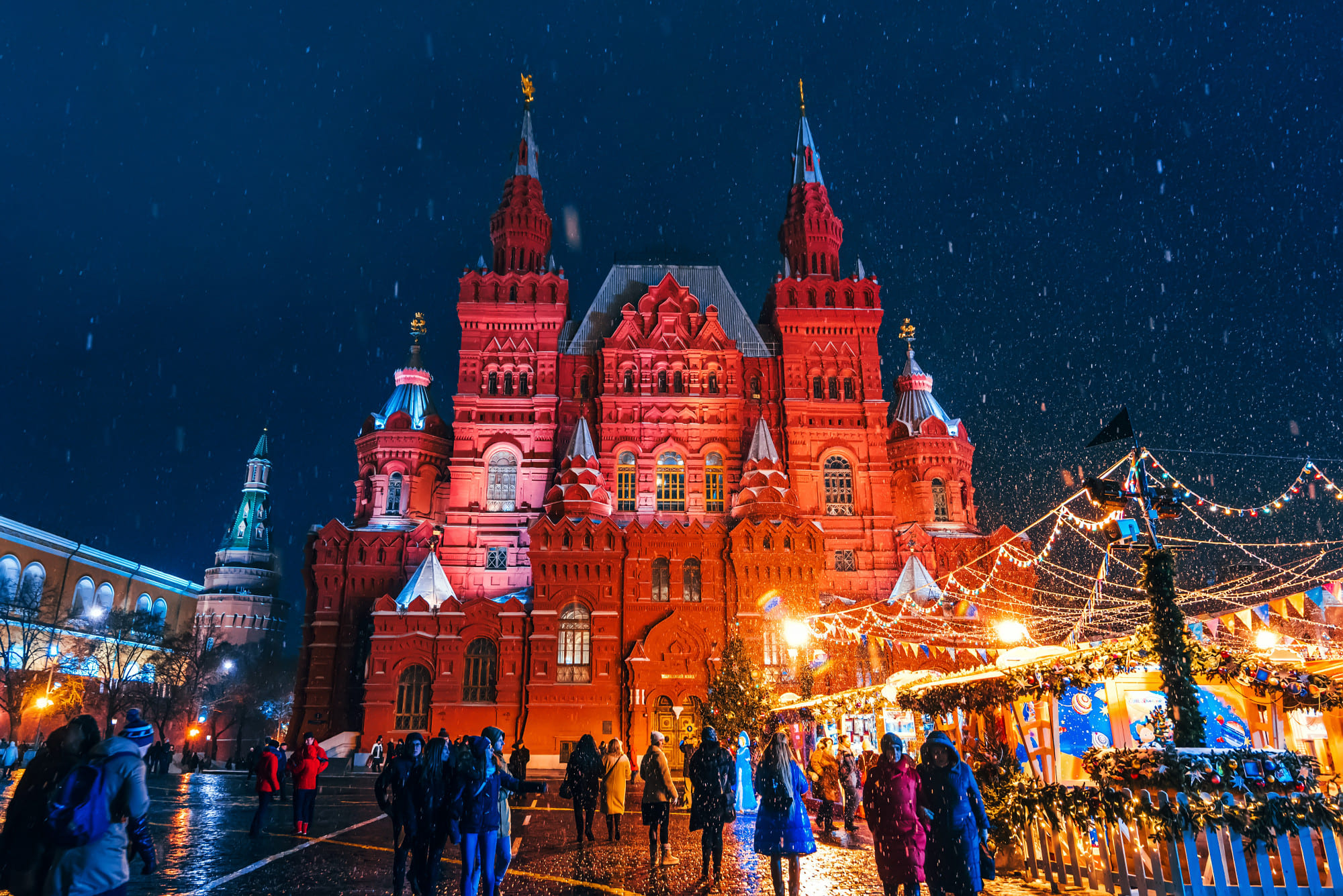
The capital is the country’s main venue for celebrating Chinese New Year. In 2025 and 2026, a large-scale international festival was held here, organized by the Moscow Government with the support of the Ministry of Foreign Affairs and the Embassy of the PRC. Over two years, the format has strengthened: in 2025, the festival attracted one and a half million guests and more than a thousand events; in 2026, it covered over a dozen venues — from Manezhnaya and Bolotnaya squares to the Moskino film park and the Tri Vokzala. Depo gastro quarter. Artists from Beijing and Chinese provinces performed opera, acrobatics, and martial arts. Workshops, festive mail services, photo zones, and quests were available.
The program for 2027 has not yet been announced, but given the scale of previous years and the fact that Moscow received the Chinese Golden Awards for Excellence in Public Relations for the project — the festival will likely continue.
If you are planning to attend the Chinese New Year celebration in Moscow, it will be convenient to use the offers on the G2R.Asia platform for organizing interesting holiday tours and business missions in the capital of Russia. To order the service, you need to submit an application in the corresponding cards. A platform manager will contact you and help you select a tour according to your requests, combining a rich cultural program with a business one.
Saint Petersburg
Saint Petersburg has been celebrating Chinese New Year for over ten years — in 2026, the XII festival «Chinese New Year — Merry Spring Festival» was held. More than 110 events: concerts with artists from Sichuan Province, a Chinese lantern festival on Zayachy Island, photo exhibitions, lectures in libraries, calligraphy and paper-cutting workshops. Festive red illumination appeared on the Palace Bridge, the TV tower, and Lakhta Center. A separate event was the Russian-Chinese business forum.
Saint Petersburg has long-standing ties with China: thousands of students from the PRC study in the city, Chinese companies operate here, and tourist flow from the Celestial Empire continues to grow. So the festival is not only a cultural event but also a platform for business contacts.
Murmansk, Sochi, and Bashkiria
The celebration of Chinese New Year is gradually expanding beyond the two capitals. Murmansk, Sochi, and Bashkiria are regions where ties with China are developing through tourism, trade, and educational exchanges. Specific programs for 2027 are still being formed, however, the trend is obvious: the geography of the holiday in Russia is expanding. Follow the announcements of local administrations and cultural centers — information usually appears a few weeks before Chunjie.
Cultural Exchange: Russia and China
Behind the celebrations lies a large context. In 2024–2025, the two countries held cross Years of Culture. In the summer of 2025, the first «Moscow Seasons» were held in Beijing — they were visited by 2.85 million people. In 2026, parallel to the Moscow festival, «Moscow Maslenitsa» operated in Beijing with a fair, round dances, and workshops. The format of bilateral exchange — when both cities simultaneously try on each other’s traditions — has already become an established practice.
Chinese New Year in Russia is not just red lanterns on the streets. It is a working tool of cultural diplomacy that covers more and more cities every year and attracts more and more people.