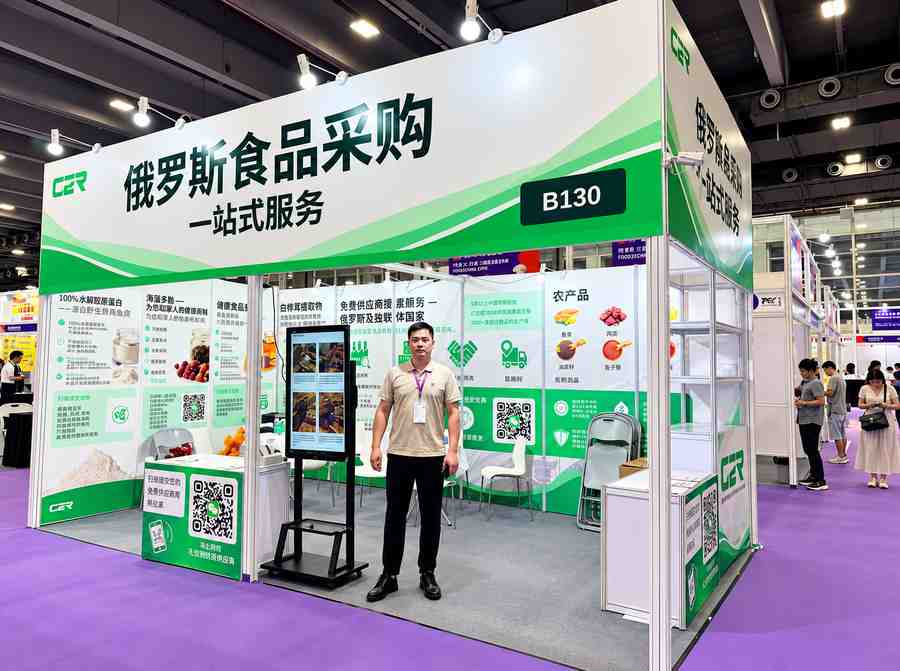
From September 10 to 12, one of China’s most popular food exhibitions, FOOD2CHINA Expo, took place. The G2R platform team presented products from four Russian manufacturers at its own collective stand and identified 66 qualified potential partners across various product categories.
We tested a model that we intend to scale up for exporters. A collective exhibition stand is not just a three-day event, but the beginning of systematic work in a new market.
Companies participating in international trade shows often face the same scenario: several months of preparation, expenses for sending employees abroad, hotels, interpreters, exhibition stands, and logistics. In the end, employees collect a stack of business cards and bring them home. But what happens next?
What follows is the most challenging stage, involving numerous questions that nobody knows the answers to:
- Who should be contacted first?
- Which visitors are genuine importers?
- Who has decision-making authority?
- Who needs a product sample?
- Who exchanged business cards simply out of politeness?
- In which language should communication continue?
- And who will handle all this a week later, when the Russian sales department returns to working with its existing customers?
To prevent this situation, G2R tested a completely different approach. The team did more than simply present Russian products at the stand and collect business cards. Every new contact was recorded, accompanied by relevant notes, and categorized according to the following criteria:
- Who the person is;
- What business their company operates in;
- Which product they are interested in;
- What the next step should be after the exhibition.
“The results we achieved exceeded our expectations. Changing the approach to working at an exhibition stand fundamentally changes the value of a trade show for an exporter. After initially collecting and qualifying the contacts, we selected 66 qualified potential partners with a specific interest in various product categories. I would like to emphasize that these companies do not belong to just one business category. They include importers and traders, manufacturers, B2B platforms, industry exhibition organizers, logistics and certification companies, representatives of business organizations, media, and e-commerce companies,” said Rushan Giniyatov, founder of the G2R platform.
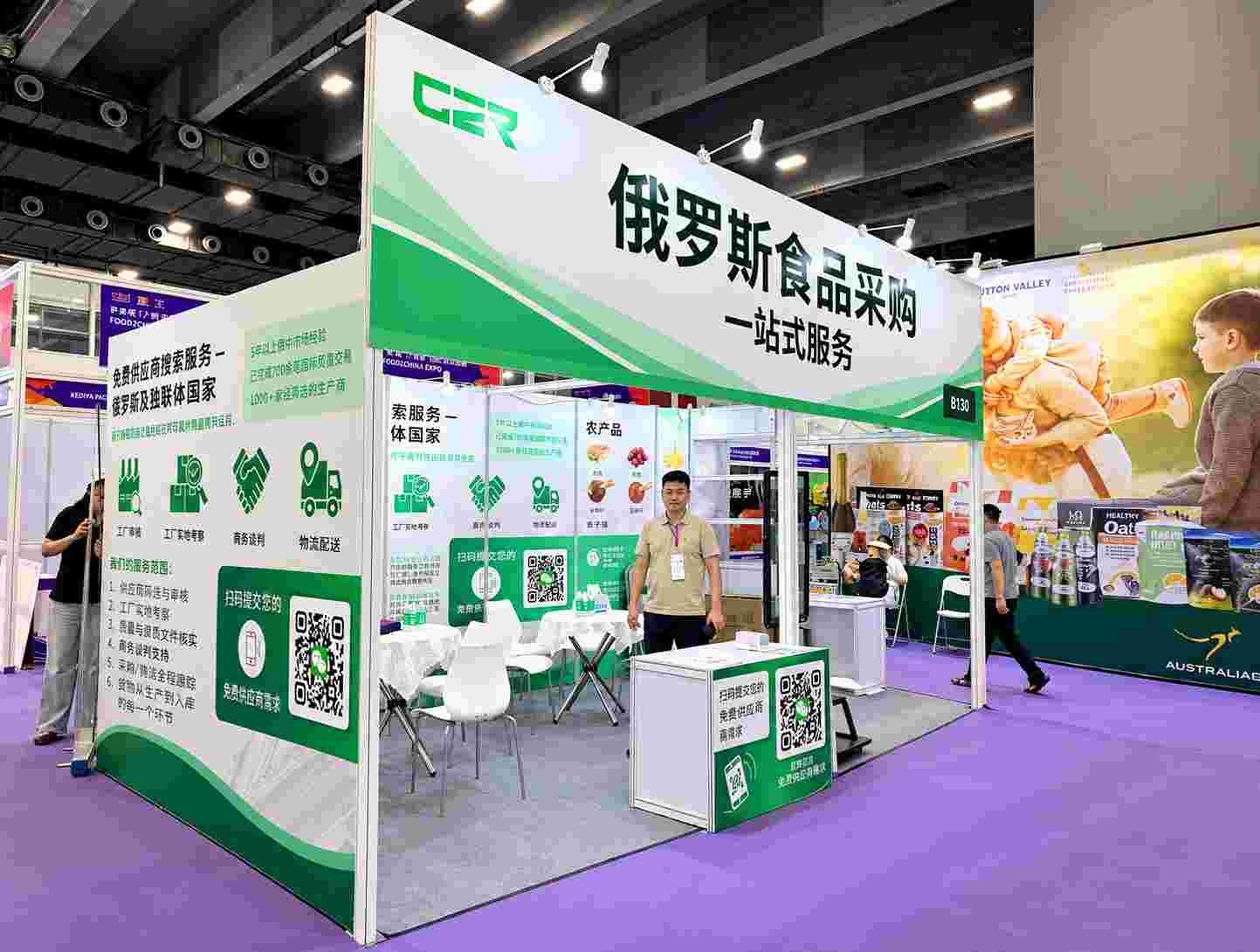
It is important to emphasize that some contacts immediately came with specific commercial inquiries. For example, our working database included requests and expressions of interest in Russian oils, grains, honey, certain meat categories, premium seafood, and various raw materials.
For other contacts, the objectives were different: finding distribution channels, negotiating joint promotional activities, gaining access to industry-specific B2B platforms, or establishing partnerships with Chinese exhibition organizers.
Remarkably, these contacts did not disappear after the exhibition. The three days of work at the trade show did not end with the dismantling of the stand, as is usually the case. In the traditional exhibition model, dismantling the stand marks the completion of the project. The contractor has built the stand, the interpreter has completed their shift, and the photographs have been sent to the client — the service has been delivered.
This is precisely when the main work with potential buyers and partners begins!
G2R’s TOP 5 steps that every exporter should take after a trade show to establish effective communication with buyers and partners:
Qualify contacts.
A potential buyer, logistics provider, competitor, agent, marketing agency, and exhibition organizer are completely different types of leads. You cannot send them all the same email and expect the same result.
Follow up quickly.
Two weeks later, the person may already be talking to dozens of other suppliers. Therefore, the real value lies not in the business card itself, but in how quickly the conversation is continued.
Give buyers the opportunity to receive a sample.
If all product samples are shipped back to Russia after the exhibition, every new request turns into a separate international shipment. We are developing a model in which samples can remain in a warehouse in China and be shipped domestically to interested companies.
Continue searching beyond the exhibition.
Even a major trade show does not cover the entire market. Contacts made at the exhibition provide insights into demand, industry terminology, objections, and target company profiles. This knowledge makes it possible to expand the search in a more targeted way.
Conduct negotiations through channels familiar to Chinese businesses.
In China, a significant share of business communication takes place through WeChat. For suitable product categories, Chinese content and e-commerce channels, including Douyin and Kuaishou, can also be used.
That is why our conclusion after FOOD2CHINA is simple:
THE EXHIBITION IS NOT THE RESULT.
THE EXHIBITION IS THE MOMENT WHEN THE MARKET COMES TOGETHER IN ONE PLACE.
The real results come later, when the contacts collected turn into sample shipments, price inquiries, negotiations, trial deliveries, and contracts.
Why Is a Collective Exhibition Stand Necessary?
For small and medium-sized manufacturers, having an individual stand at an international trade show can be too expensive or simply unnecessary. The financial costs are substantial, as companies must pay not only for exhibition space but also for stand construction, personnel, interpreters, logistics, and employee business trips. At the same time, a single Russian manufacturer is unlikely to attract a continuous flow of its specific target buyers throughout every day of the exhibition.
In this situation, participating in a collective exhibition stand offers a practical solution. Costs are shared among participants, while the local team can present several products depending on customer inquiries.
Participation in a collective exhibition stand delivers results when it is supported by an established and permanent operational infrastructure in China.
Under the G2R team’s model, the Russian side prepares the manufacturer and its products for participation in the exhibition, while the Chinese operations team handles local organization, communication, contact management, and follow-up activities.
In China, this work involves GUANGZHOU SEVEN WINDS INTERNATIONAL TRADE CO., LTD., warehousing infrastructure in the People’s Republic of China, and G2R’s own B2B platform, G2R.Asia.
This makes it possible to establish a business process that does not end on the last day of the exhibition:
Russia → Product preparation → Trade show in China → Leads → Sample warehouse → Sample shipments → Partner search → Negotiations → Deal.
Is It Necessary to Spend Money on a Trip to China?
Under G2R’s basic participation model, companies can take part in exhibitions without sending their entire team to China. We transport products and promotional materials, rather than people simply for the sake of being physically present.
At the exhibition venue in China, a local team handles operations: presenting products, recording inquiries, collecting and qualifying contacts, and preparing photo and video reports. The Russian manufacturer joins negotiations remotely whenever their input or decision is required. If a particular exhibition requires the physical presence of an official representative, this requirement is verified before booking space at the collective stand.
For small and medium-sized businesses, this model is cost-effective. The company pays for product representation and commercial activities in China, as well as employee business trips “just in case.”
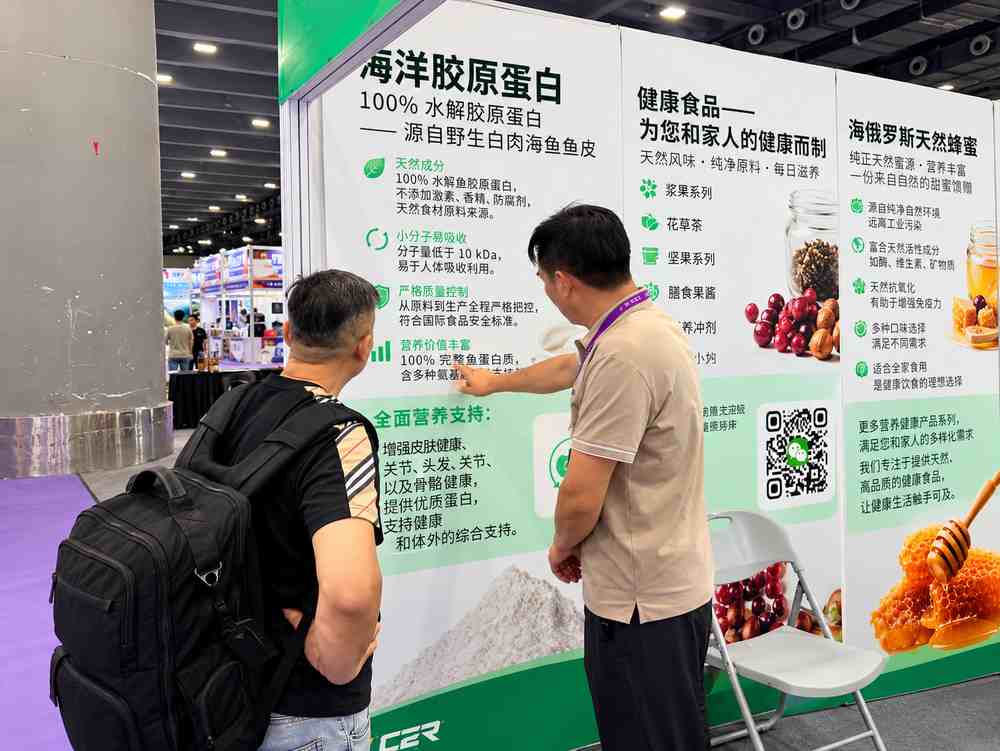
How Did the G2R Team Test the Model at FOOD2CHINA?
The exhibition participation model described above delivers benefits that are difficult to achieve remotely: a high concentration of potential buyers from the same industry, direct reactions to products, and the opportunity to identify dozens of potential business opportunities within just a few days.
However, three days of work at a trade show are not enough to establish an export channel. That is why G2R’s new service is built around collective exhibition stands for Russian manufacturers at trade shows in China, with mandatory follow-up activities after the event. It is a system in which products continue working in the Chinese market even after the exhibition hall closes.
Would you like to test demand for your product in China? Submit an application, and we will assess its potential for exhibition participation free of charge, recommend suitable events and collective participation formats, and provide a step-by-step plan for working with the contacts collected and the product samples remaining after the exhibition.